

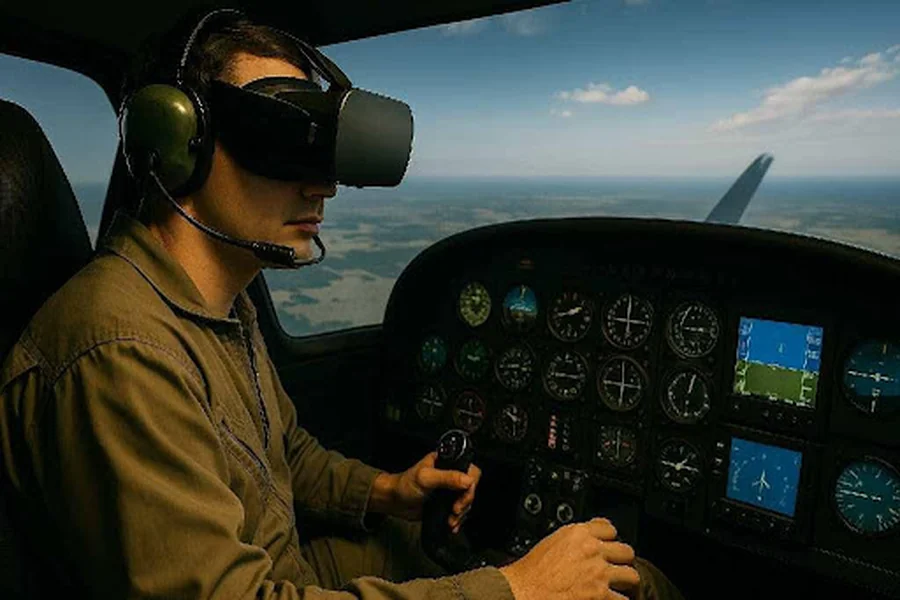
The evolution of flight training has been nothing short of revolutionary, especially with the advent of Extended Reality (XR) technologies. As the debate intensifies around the efficacy of XR in pilot training, the question arises: why would we still risk a $300 million flight if XR training provides the same outcomes as traditional methods? This exploration dives into the intricate web of virtual reality flying, XR flight training advantages, and the broader implications for advanced pilot virtual reality training.
The gaming industry has long embraced virtual environments to enhance user experiences. Similarly, the aviation sector is harnessing XR technology to simulate real-world flying conditions. XR encompasses virtual reality (VR), augmented reality (AR), and mixed reality (MR), offering immersive experiences that replicate the intricacies of piloting an aircraft.
The realism achieved through XR is akin to stepping into the cockpit of a commercial jet, without ever leaving the ground. XR technology can mimic the smallest details of an aircraft’s controls and environment, enabling pilots to familiarize themselves with the cockpit layout and instrumentation. This fidelity allows aspiring pilots to build a strong foundational understanding before they ever set foot in a real aircraft.
Immersive Environment
XR creates a 360-degree virtual environment that mirrors real-life flying conditions. It enables pilots to experience diverse weather patterns, system failures, and emergency scenarios in a controlled setting. This realism is crucial for developing the necessary skills and reflexes essential for handling actual aircraft.
Moreover, XR environments are not static; they can be continuously updated to reflect the latest in aviation technology and procedures. This dynamic nature ensures that pilots are always training with the most current information, keeping them prepared for any updates or changes in real-world aviation practices. Additionally, the ability to simulate a wide range of scenarios, from common flight paths to rare emergency situations, allows pilots to gain confidence and experience without the associated risks.
Cost-Effectiveness
Traditional flight training is an expensive endeavor, with costs soaring as high as $300 million for specific aircraft. In contrast, XR flight training drastically reduces these expenses. By eliminating the need for physical aircraft and related logistics, XR not only cuts costs but also minimizes the environmental impact associated with conventional training methods.
Furthermore, the scalability of XR training means that more pilots can be trained simultaneously, reducing the bottleneck often seen in traditional training programs. This scalability is crucial as the demand for pilots continues to grow globally. By lowering financial barriers, XR makes pilot training more accessible, encouraging a more diverse group of individuals to pursue careers in aviation.
Advantages of XR Flight Training
The shift towards XR in pilot training is fueled by several compelling advantages:
Enhanced Safety
Safety is paramount in aviation. XR allows pilots to practice challenging scenarios without the risk of physical harm. This environment enables trainees to master emergency procedures, enhancing their confidence and competence.
Additionally, by removing the physical risks, XR allows instructors to design even more challenging scenarios that would be too dangerous to attempt in real life. This capability ensures that pilots are well-prepared for even the most severe in-flight emergencies. Moreover, the repetition of these scenarios in a safe environment helps in ingraining proper responses, reducing the likelihood of panic and errors during actual flights.
Customizable Training Modules
XR technology offers customizable training experiences tailored to the specific needs of pilots. Whether it’s mastering a new aircraft model or practicing emergency landings, XR provides modules that can be easily adjusted to suit varying levels of expertise.
The flexibility of XR modules means that training can be adapted for different learning paces and styles, accommodating both fast learners and those who need more time to grasp complex concepts. This personalization ensures that every pilot receives the attention and resources they need to excel, ultimately leading to a more competent and confident aviation workforce.
Real-Time Feedback and Analytics
Advanced data analytics integrated within XR systems provide real-time feedback on pilot performance. This feature enables instructors to identify areas of improvement and personalize training regimens, ensuring that pilots achieve proficiency efficiently.
The analytics also offer insights into the effectiveness of the training modules themselves, allowing for continuous improvement and optimization of the training programs. By leveraging this data, training organizations can ensure that their methods remain cutting-edge, providing pilots with the highest quality education possible.
The Role of Virtual Reality Development Companies in Aviation Training
The rise of XR training wouldn’t be possible without the innovation and technical expertise of a specialized VR game development company. These companies are at the forefront of creating immersive aviation simulations that replicate the complexity of real-world flight scenarios.
From building hyper-realistic 3D cockpits to programming AI-driven emergency simulations, VR development companies provide the technological backbone that makes advanced pilot XR training feasible. By collaborating with aviation experts and flight instructors, these developers ensure that VR-based training modules are not just visually realistic but also educationally effective and FAA-compliant where applicable.
This collaboration between the aviation industry and the VR development sector is driving the next generation of pilot education, blending cutting-edge technology with rigorous training protocols.
The Debate: XR vs. Traditional Flight Training
The aviation industry is at a crossroads, with proponents of XR flight training advocating for its widespread adoption, while traditionalists remain skeptical. Here are the core arguments from both sides:
Proponents of XR Training
- Technological Advancement: XR reflects the technological progression in training methodologies, offering a modern solution to pilot education. The integration of XR signifies a forward-thinking approach that aligns with the rapid advancements in aviation technology.
- Accessibility: With XR, training can be conducted anywhere, removing geographical barriers and making it accessible to a broader range of aspiring pilots. This flexibility is particularly beneficial in regions lacking comprehensive flight training facilities, opening up opportunities for more individuals to enter the aviation industry.
- Efficiency: The immersive nature of XR accelerates learning, enabling trainees to absorb complex information quicker than traditional methods. By shortening the learning curve, XR helps pilots reach proficiency faster, potentially reducing the time and cost associated with training.
Critics of XR Training
- Lack of Physical Sensation: Critics argue that XR cannot replicate the physical sensations of flying, such as G-forces and turbulence, which are crucial for complete pilot training. This absence of tactile feedback could lead to a disconnect between virtual training and real-world experiences.
- Dependence on Technology: There is a concern about over-reliance on technology, which may reduce the ability of pilots to improvise in unexpected real-world situations. Critics worry that an overemphasis on XR may lead to a loss of critical thinking and problem-solving skills essential for safe piloting.
- Integration Challenges: Integrating XR into existing training programs requires significant infrastructure changes, which can be costly and time-consuming. This challenge may deter some training organizations from adopting XR, particularly those with limited resources.
Overcoming XR Training Limitations with Haptic Feedback and AI Integration
While XR cannot yet replicate physical sensations like G-forces, ongoing advancements in haptic feedback systems are helping bridge this gap. New XR pilot training setups integrate wearable haptics and motion platforms, simulating cockpit vibrations, control resistance, and turbulence-like feedback.
Additionally, the integration of AI-driven adaptive learning systems allows XR environments to respond in real-time to pilot actions. These systems monitor decision-making, adjust difficulty levels dynamically, and provide personalized feedback. As technology progresses, this AI-enhanced XR approach will make virtual training even closer to real-world experience, reducing the divide between simulation and actual flight.
Bridging the Gap: A Hybrid Approach
The future of pilot training may lie in a hybrid approach that combines the best of both worlds. By integrating XR technologies with traditional training methods, the aviation sector can leverage the safety and cost-efficiency of XR while maintaining the tactile learning experiences of physical flight.
Implementing a Hybrid Model
- Simulated Flight Hours: Incorporate XR flight hours alongside actual flight training to provide a comprehensive learning experience. This integration ensures that pilots receive both the theoretical knowledge from XR and the practical skills from real-world flights.
- Scenario-Based Learning: Use XR for scenario-based training, allowing pilots to experience and respond to rare but critical situations. By practicing these scenarios in a safe environment, pilots can develop the quick reflexes and decision-making skills required in emergencies.
- Continuous Skill Assessment: Employ XR analytics to continuously assess and refine pilot skills, ensuring they meet the highest standards of aviation safety. This ongoing evaluation helps maintain a high level of competency and readiness among pilots.
The Future of Flight Training Technology
As technology continues to evolve, so too will the methodologies for training pilots. The integration of artificial intelligence and machine learning with XR could further enhance the realism and effectiveness of virtual flight training.
These advancements could lead to personalized training experiences that adapt to individual learning patterns, making training even more efficient and effective. Furthermore, as the gaming industry pushes the boundaries of XR, the aviation sector stands to benefit from these advancements, creating more engaging and effective training environments for pilots.
Why Aviation Needs Specialized VR Development, Not Just Gaming XR
It’s important to note that aviation XR training requires different development expertise compared to consumer gaming VR. Flight simulation demands precision physics, certified aircraft modeling, and FAA-level procedural accuracy—not just entertainment value.
A virtual reality development company specializing in aviation training must focus on:
- Accurate cockpit replication
- Real-time system failure simulations
- Multi-user VR cockpit collaboration
- Integration with real-world avionics data
- Compliance with aviation safety protocols
This is why aviation sectors turn to enterprise-level VR developers, not just general XR studios. The collaboration ensures flight schools and airlines get custom-built solutions tailored for serious training, not generic VR experiences.
Conclusion
The debate over XR versus traditional flight training is far from settled, yet the potential advantages of XR are undeniable. By investing in this technology, the aviation industry can significantly reduce costs, improve safety, and create a new generation of highly skilled pilots.
The key to success lies in embracing a balanced approach that incorporates both innovative XR technologies and time-tested traditional methods. This strategy will ensure that pilots are not only equipped with theoretical knowledge but also the practical skills necessary to navigate the skies safely.
In the end, whether you’re a game developer, a video game journalist, or a content strategy manager at a gaming company, the advancements in XR training offer valuable insights into how immersive technologies are shaping industries beyond gaming. The lessons learned here can certainly spark engaging debates and inspire new ways to harness technology in your respective fields.
