

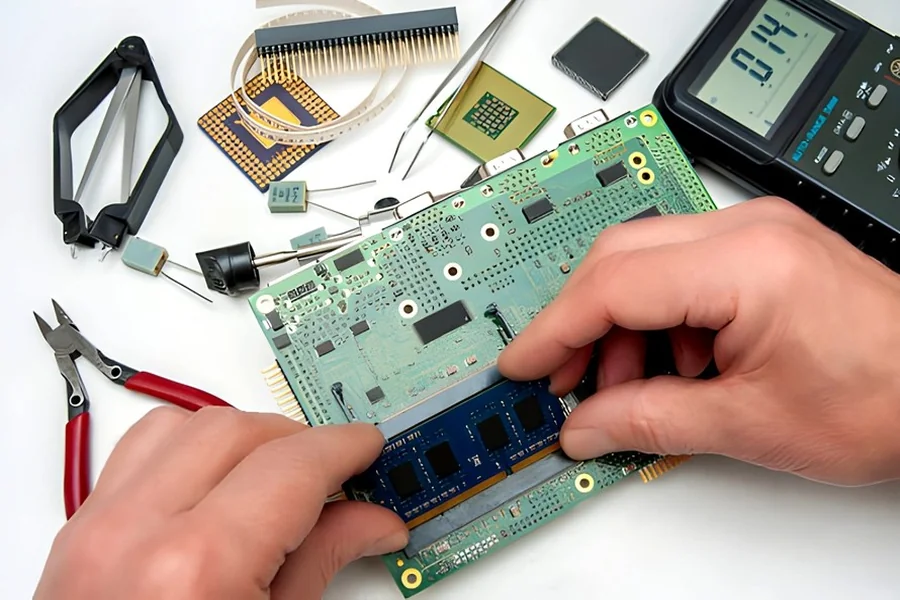
Rigid flex PCB assembly refers to the process of assembling printed circuit boards that combine rigid board sections with flexible circuits into a single interconnected structure. This hybrid design allows electronic products to achieve higher reliability, compact form factors, and improved electrical performance compared to traditional rigid-only boards. Rigid flex PCB assembly has become increasingly important in modern electronics where space constraints, mechanical durability, and signal integrity are critical.
By eliminating connectors and cables between rigid boards, rigid flex PCB assembly reduces interconnection failures and enhances overall system stability. This makes it an ideal solution for advanced electronic applications requiring complex layouts and consistent performance.
Why Rigid Flex PCB Assembly Is Essential in Modern Electronics
Rigid flex PCB assembly plays a vital role in supporting innovative product designs while maintaining manufacturing efficiency and long-term reliability.
Space Optimization and Design Flexibility
One of the primary advantages of rigid flex PCB assembly is its ability to support three-dimensional design configurations. Flexible sections allow boards to bend and fold, enabling compact packaging in tight enclosures. This design freedom helps engineers reduce product size without sacrificing functionality.
Improved Mechanical Reliability
Rigid flex PCB assembly minimizes the need for connectors, which are common failure points in electronic systems. By integrating rigid and flexible sections into a single assembly, mechanical stress caused by vibration, movement, or repeated flexing is significantly reduced, improving product lifespan.
Key Manufacturing Considerations in Rigid Flex PCB Assembly
Producing high-quality rigid flex PCB assembly requires careful planning, precise execution, and strong coordination between design and manufacturing teams.
Material Selection and Stackup Design
Rigid flex PCB assembly involves specialized materials such as flexible polyimide substrates and rigid FR-4 laminates. Proper stackup design ensures balanced flexibility, controlled impedance, and mechanical strength. Incorrect material choices can lead to delamination or performance degradation during operation.
Design for Manufacturability
Design rules for rigid flex PCB assembly differ from standard rigid boards. Bend radius, copper thickness, and trace routing must be carefully optimized to prevent cracking or signal loss. Early manufacturability reviews help ensure smooth assembly and consistent yields.
Rigid Flex PCB Assembly Process Overview
The rigid flex PCB assembly process combines multiple manufacturing and assembly steps into a unified workflow.
Fabrication of Rigid and Flexible Sections
Rigid and flexible layers are fabricated separately before being laminated into a single structure. This step requires precise alignment and bonding to maintain electrical continuity and mechanical stability across all sections.
Component Placement and Soldering
During rigid flex PCB assembly, components are typically placed on rigid sections where mechanical support is strongest. Advanced assembly equipment ensures accurate placement and reliable solder joints, even with complex board geometries.
Challenges in Rigid Flex PCB Assembly
Although rigid flex PCB assembly offers many advantages, it also introduces unique challenges that require specialized expertise.
Handling and Assembly Complexity
Flexible sections are more delicate than rigid boards, making handling and fixturing more complex during assembly. Proper tooling and controlled processes are essential to avoid damage or misalignment.
Higher Initial Engineering Effort
Rigid flex PCB assembly often requires more upfront engineering time for design validation and process planning. However, this investment is typically offset by reduced assembly steps and improved reliability in the final product.
Quality Control in Rigid Flex PCB Assembly
Quality assurance is especially critical due to the complexity of rigid flex structures.
Inspection and Testing Procedures
Rigid flex PCB assembly undergoes thorough inspection, including visual checks, electrical testing, and functional validation. These inspections ensure that solder joints, flexible interconnections, and rigid sections perform as intended.
Reliability and Stress Testing
Many rigid flex PCB assembly projects require additional reliability testing such as bend cycle testing, thermal cycling, and vibration analysis. These tests confirm that the assembly can withstand real-world operating conditions.
Applications of Rigid Flex PCB Assembly
Rigid flex PCB assembly is widely used in industries that demand compact, durable, and high-performance electronics.
Aerospace and Defense Systems
In aerospace and defense applications, rigid flex PCB assembly supports lightweight designs while maintaining exceptional reliability under extreme environmental conditions.
Medical and Wearable Devices
Medical equipment and wearable electronics benefit from rigid flex PCB assembly due to its compact size and ability to conform to ergonomic designs without compromising performance.
Industrial and Consumer Electronics
From industrial control systems to high-end consumer devices, rigid flex PCB assembly enables advanced product designs with improved durability and simplified internal interconnections.
Conclusion
Rigid flex PCB assembly offers a powerful combination of design flexibility, mechanical reliability, and electrical performance for modern electronic products. By integrating rigid and flexible circuits into a single assembly, manufacturers can reduce complexity, improve durability, and enable innovative form factors. To ensure consistent quality and successful implementation, partnering with experienced providers of printed circuit board assembly services helps transform complex rigid flex designs into reliable, production-ready solutions.
